EMDR Therapy
EMDR: A Different Way to Work Through What’s Stuck
Sometimes people come to therapy knowing exactly what’s wrong but still feeling like their nervous system hasn’t caught up.
You might understand something logically… and still feel anxious, triggered, overwhelmed, or stuck in old patterns.
You may be struggling with traumatic or other distressing memories that seem impossible to shake.
EMDR can help with that.
What Is EMDR?
EMDR stands for Eye Movement Desensitization and Reprocessing.
It’s an evidence-based therapy that helps the brain process distressing experiences in a new way, so they don’t keep showing up as intensely in the present.
Many people seek EMDR for trauma, but it can also be helpful for things like anxiety, panic, grief, or painful relationship experiences that still feel close.
How Does EMDR Work?
When something overwhelming happens, the brain doesn’t always get the chance to fully process it.
Instead, the memory can stay “stuck,” and certain reminders can bring up the same emotions or body reactions all over again.
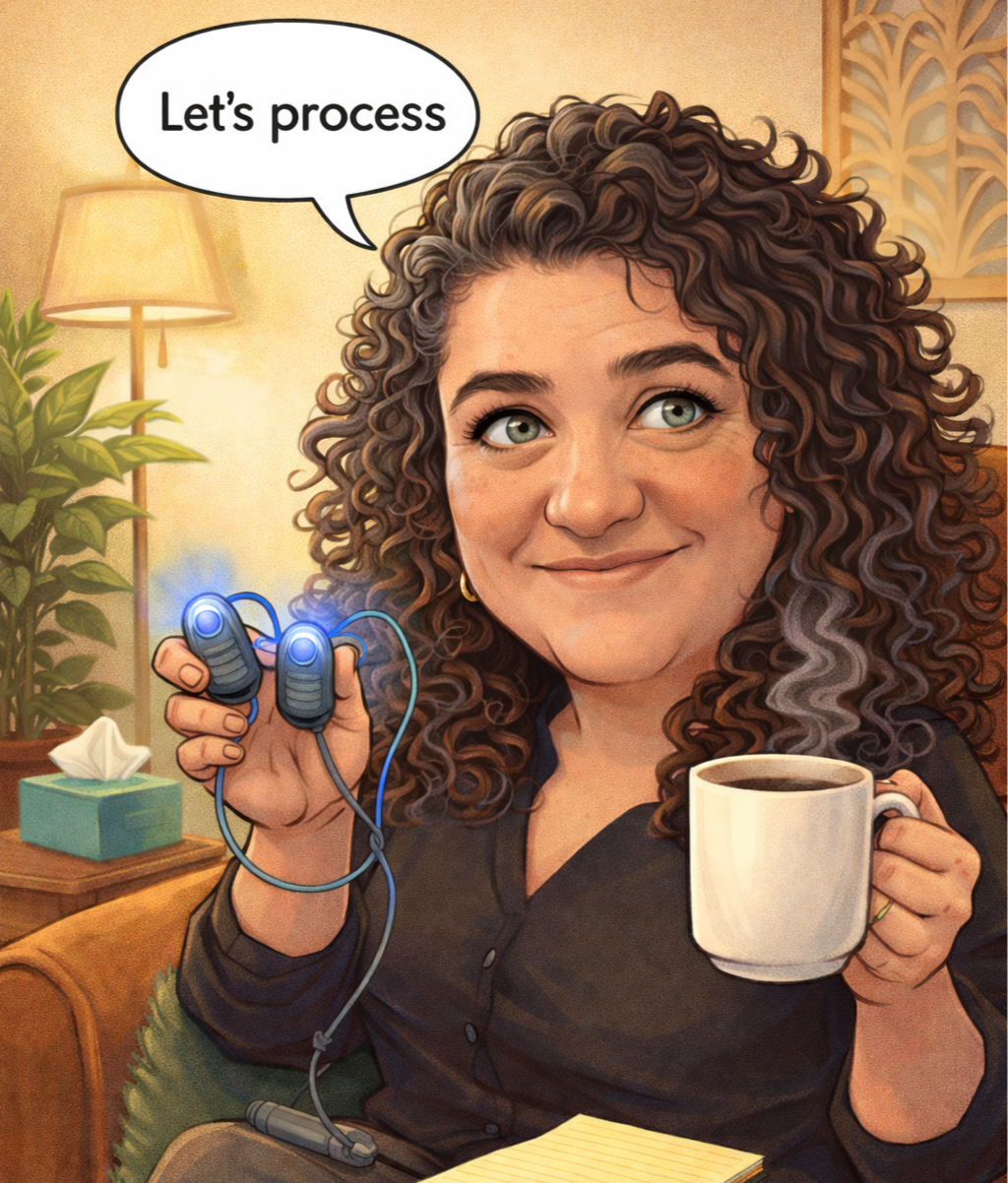
In EMDR, we use gentle bilateral stimulation (like eye movements, tapping, or handheld buzzers) while you focus briefly on parts of a memory.
Over time, the brain is able to file it away differently — and it often starts to feel less heavy, less sharp, and less activating.
What Is It Like in Session?
A lot of people worry EMDR means reliving everything.
That isn’t the goal.
We go slowly, and we spend time building safety and coping tools first. You stay in control the entire time, and we only move forward when it feels appropriate for you.
Many clients are surprised by how steady and grounded EMDR sessions can feel, and some begin to notice meaningful shifts in daily life as the work progresses, with benefits that continue to build over time.
Do I Have to Share Every Detail?
No.
EMDR does not require you to talk through every part of what happened. We work with what feels manageable, and your comfort and safety come first.
Is EMDR Right for You?
EMDR may be a good fit if you feel like you’ve done a lot of thinking and talking, but something still feels unresolved underneath.
If you’re curious, we can have a conversation about whether EMDR makes sense for you, or whether another approach would be a better starting point.
Next Step
If you’d like to learn more about EMDR or explore whether it could be part of your therapy, feel free to reach out.
Both Rachael and Katie are trained in EMDR and practice it every day.
You can reach Rachael Yearick at 843-259-2812. She sees clients in person in Charleston, SC and via telehealth throughout South Carolina.
You can reach Katie Killham at 843-919-0112. She sees clients in person in Florence, SC and via telehealth throughout the state.